
Year-Round Comfort for Your Tulsa Home
Heat pump installation in Tulsa, OK provides a single, efficient solution for both heating and cooling your home throughout Oklahoma’s changing seasons. Here’s what you need to know when searching for professional installation:
Quick Answer: Finding Heat Pump Installers in Tulsa
- Licensed & NATE-certified technicians ensure proper sizing and code compliance
- Professional assessment includes home evaluation, ductwork inspection, and system recommendations
- Installation typically takes 1-2 days depending on your home’s existing setup
- Modern heat pumps handle Tulsa’s hot summers and cold winters with auxiliary heating support
- Energy savings of 20-30% compared to traditional heating systems
- Expected lifespan of 15+ years with proper maintenance
Tulsa’s climate presents unique challenges—scorching summers that push cooling systems to their limits and cold winters that demand reliable heat. A properly installed heat pump addresses both extremes by transferring heat rather than generating it, making it one of the most energy-efficient options available. Whether you’re replacing an aging furnace and air conditioner with a single system or upgrading to reduce your energy bills, understanding the installation process helps you make confident decisions about your home’s comfort.
If you’re ready to explore HVAC system upgrades or need help with heat pump replacement installation, professional guidance makes all the difference.
I’m Cody Dampf, President of American Home Pros and a U.S. Marine Corps veteran with years of hands-on HVAC experience serving Tulsa families. I’ve personally overseen countless heat pump installation in Tulsa, OK projects and understand what it takes to deliver reliable, year-round comfort for Oklahoma homeowners.
The Top Benefits of Choosing a Heat Pump System
When it comes to keeping your home comfortable in Tulsa’s ever-changing weather, a heat pump is an all-star player. It’s not just about heating or cooling; it’s about smart, efficient, and consistent climate control all year long. Choosing a heat pump for your home means embracing a host of advantages that traditional systems simply can’t match.
One of the most compelling benefits is the year-round comfort it provides from a single, integrated system. Imagine not having to worry about switching between a furnace and an air conditioner as the seasons shift. A heat pump seamlessly transitions between heating and cooling modes, ensuring your home maintains an ideal temperature whether it’s 100 degrees in July or 20 degrees in January. This dual functionality simplifies your home comfort system, offering consistent performance and peace of mind.
Perhaps the biggest draw for homeowners in Tulsa and beyond is the significant energy savings. Heat pumps are renowned for using less electricity than conventional heating and cooling systems. Instead of generating heat through burning fuel or electrical resistance, they simply transfer heat from one place to another. This renewable heat transfer technology makes them incredibly efficient. In fact, heat pumps use less electricity in heating mode than an electric furnace, and the savings provided when making the switch can be significant. Many homeowners report reduced energy bills, making it a smart long-term investment. To learn more about how to maximize these savings, check out our guide on How to Lower Energy Costs of Your HVAC System.
Beyond your wallet, heat pumps are also an eco-friendly choice. By reducing electricity consumption and operating on renewable heat transfer, they significantly lower your home’s carbon footprint. This makes them an environmentally smart choice for those looking to lessen their impact on the planet.
Another often-appreciated benefit is their quiet operation. Modern heat pumps run more quietly than traditional HVAC systems, allowing you to enjoy a peaceful home environment without the constant hum or roar of older units. This is a subtle but impactful improvement to daily living.
Finally, with proper maintenance, heat pumps boast a long lifespan, often lasting 15 years or longer. Their durability means fewer replacements and repairs over time, adding to their cost-effectiveness and reliability. This longevity, coupled with their efficiency and comfort, truly improves your home’s value and your quality of life. For a deeper dive into the overall advantages of upgrading your HVAC system, take a look at How a New HVAC System Benefits You.
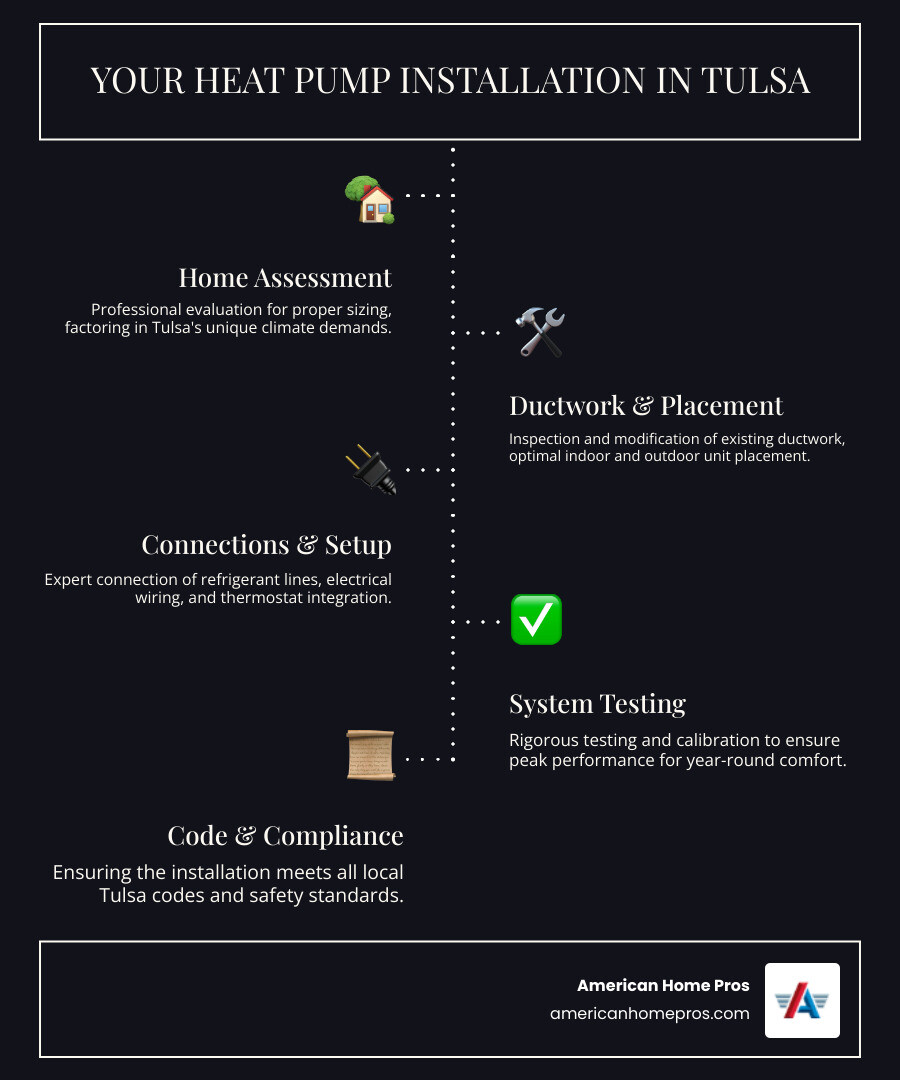
Understanding the Heat Pump Installation in Tulsa, OK Process
When you decide to move forward with a heat pump installation in Tulsa, OK, you’re starting on a process designed to maximize your home’s comfort and efficiency. It’s more than just swapping out old equipment; it’s about tailoring a complete climate control solution specifically for your living space.
The journey begins with a thorough home assessment. Our team will visit your property to evaluate several critical factors. This includes inspecting your home’s layout, insulation levels, window quality, and existing ductwork. We also consider your family’s specific heating and Air Conditioning needs, lifestyle, and comfort preferences. This comprehensive evaluation is crucial for recommending the right type and size of heat pump system. Without this initial step, you risk an improperly sized system that either works too hard, leading to high energy bills, or fails to adequately heat or cool your home.
Next, we move to system sizing. This is a critical step where we calculate the precise heating and cooling load your home requires. We don’t just guess; we use industry-standard methods to ensure the heat pump capacity (measured in BTUs) perfectly matches your home’s unique demands. An undersized unit will struggle to maintain comfortable temperatures, constantly running and driving up energy costs. Conversely, an oversized unit will cycle on and off too frequently (short-cycling), which not only wastes energy but also fails to properly dehumidify your home and can shorten the system’s lifespan. Proper sizing is the cornerstone of optimal performance and efficiency for your Heating system.
Finally, we conduct a detailed ductwork inspection. The condition and design of your existing ductwork play a huge role in how efficiently your new heat pump will operate. Leaky, poorly insulated, or improperly sized ducts can negate many of the energy-saving benefits of a high-efficiency heat pump. We’ll assess the integrity of your ducts, identify any areas needing repair or sealing, and recommend modifications if necessary to ensure optimal airflow and distribution throughout your home. In some cases, especially for older homes, ductwork replacement might be recommended to achieve peak performance.
The actual installation process typically takes about one to two days, depending on the complexity of your home and the specific system being installed. Our goal is always a seamless, efficient, and thorough installation that leaves you with reliable, year-round comfort.
How to Choose the Right Heat Pump for Tulsa’s Climate
Choosing the right heat pump for your home in Tulsa, OK, means finding a system that can gracefully handle our notoriously hot summers and surprisingly chilly winters. It’s about more than just buying the latest model; it’s about making an informed decision that ensures long-term comfort and efficiency.
One of the most important considerations is understanding SEER and HSPF ratings. These are the industry standards for measuring a heat pump’s efficiency.
- SEER (Seasonal Energy Efficiency Ratio) measures cooling efficiency. A higher SEER rating indicates greater energy efficiency during the cooling season, meaning lower electricity consumption to keep your home cool. To truly understand what these numbers mean for your energy bills, dig into What Does a SEER Rating Mean?.
- HSPF (Heating Seasonal Performance Factor) measures heating efficiency. A higher HSPF rating means better energy efficiency during the heating season, translating to less electricity used to warm your home.
Modern heat pumps have seen significant advancements in these ratings. Staying up-to-date with the latest efficiency standards, like SEER 2 Info, can help you make the most energy-conscious choice.
Beyond efficiency ratings, system capacity is paramount. As discussed, the heat pump’s capacity, measured in BTUs (British Thermal Units), must be precisely matched to your home’s size and thermal characteristics. An HVAC professional will perform a load calculation, considering factors like square footage, insulation, window efficiency, and local climate data, to determine the ideal capacity. This ensures your unit can effectively heat and cool without overworking or short-cycling.
For Tulsa’s coldest days, auxiliary heat is a crucial feature. While modern heat pumps are highly effective even in low temperatures by extracting heat from the outside air, there will be times when temperatures dip too low for the heat pump alone to efficiently maintain comfort. That’s where auxiliary heating strips come in. These electric resistance coils automatically supplement the heat pump, ensuring your home stays warm even when the mercury plummets. This is a standard and essential component for heat pumps operating in climates like ours.
Finally, consider humidity control. Tulsa experiences high humidity, especially during the summer. A good heat pump system, properly sized and installed, will not only cool your home but also effectively remove excess moisture from the air. This is vital for comfort, air quality, and preventing issues like mold growth. High-efficiency units with dehumidifying features are particularly ideal for our climate.
By focusing on these key factors – SEER/HSPF ratings, correct capacity, auxiliary heat, and humidity control – you can confidently choose a heat pump that provides optimal comfort and efficiency for your Tulsa home year-round.
Why Professional Heat Pump Installation in Tulsa, OK is Crucial
Undertaking a heat pump installation in Tulsa, OK is a significant investment in your home’s comfort and energy efficiency. While the idea of a DIY project might seem appealing to some, the complexities involved make professional installation not just recommended, but truly crucial for the long-term success of your system.
First and foremost, professional installers bring a level of expertise that ensures the job is done right the first time. Our licensed technicians possess the necessary certifications and training to handle all aspects of heat pump installation. This includes everything from safely handling refrigerants to making precise electrical connections and ensuring proper drainage. You wouldn’t trust a plumber to do your dental work, so why trust an amateur with your home’s central comfort system?
Furthermore, many of our technicians are NATE-certified. NATE (North American Technician Excellence) certification is a rigorous, industry-recognized standard that demonstrates a technician’s real-world working knowledge of HVAC systems. This means they are not just trained, but proven experts in the field, capable of delivering superior installation quality.
Local expertise is another invaluable asset. As a company deeply rooted in Tulsa and its surrounding communities, we understand the specific challenges and nuances of our local climate. This local knowledge informs our recommendations for system sizing, auxiliary heat requirements, and optimal placement for outdoor units, ensuring your heat pump is perfectly suited to handle Tulsa’s distinct seasons.
The importance of proper sizing cannot be overstated. As discussed earlier, an incorrectly sized heat pump will lead to inefficient operation, higher energy bills, and a shorter lifespan. Professional installers use sophisticated calculations and their experience to ensure your unit is perfectly matched to your home’s heating and cooling load. This precision prevents costly mistakes down the line.
Finally, professional installation guarantees code compliance. HVAC installations are subject to local building codes and regulations designed to ensure safety and efficiency. Our licensed technicians are intimately familiar with these codes and ensure every aspect of your installation meets or exceeds them. This not only protects your home and family but also ensures your system passes any necessary inspections and doesn’t create issues when it comes time to sell your home. The quality of installation largely determines how long a system will last and how well it performs, making professional expertise truly non-negotiable.
Lifespan and Maintenance: Protecting Your Investment
A heat pump is a significant investment in your home’s comfort and value. Like any high-performing system, its longevity and efficiency depend heavily on consistent care. Understanding the expected lifespan of your heat pump and committing to proactive maintenance are key to protecting that investment.
With proper maintenance, heat pumps can last 15 years or longer. Some modern units, especially well-maintained ones, can even exceed two decades of reliable service. This makes them a durable and long-lasting choice for year-round climate control. However, “proper maintenance” isn’t just a suggestion; it’s a requirement for achieving that impressive lifespan and ensuring your system operates at peak efficiency throughout its lifetime.
Regular maintenance isn’t just about preventing breakdowns; it’s about optimizing performance, maintaining energy efficiency, and preserving your warranty. Just like you wouldn’t skip oil changes for your car, you shouldn’t neglect your heat pump. For a comprehensive approach to keeping all your home’s systems in top shape, explore our HVAC Maintenance services, or consider joining our Maintenance Club for hassle-free, regularly scheduled care.
Key Maintenance Tasks for Your Heat Pump
To ensure your heat pump continues to deliver reliable, efficient comfort for years to come, a few key maintenance tasks are essential. Some you can do yourself, while others require the expertise of a professional.
One of the simplest yet most crucial tasks is regular filter changes. Your heat pump’s air filter traps dust, dirt, pet dander, and other airborne particles, preventing them from circulating through your home and accumulating on the system’s internal components. A dirty filter restricts airflow, forcing your heat pump to work harder, which reduces efficiency and can lead to premature wear. We recommend checking and replacing your filter every 1-3 months, especially during periods of heavy use or if you have pets or allergies. This is a quick fix that makes a huge difference.
Another important DIY task is cleaning the outdoor unit. The outdoor unit, or condenser, is exposed to the elements and can accumulate leaves, grass clippings, dirt, and other debris. This debris can block airflow, reducing the unit’s ability to efficiently transfer heat. Periodically, gently clear away any obstructions from around the unit and carefully rinse the coils with a garden hose. Just be sure to turn off the power to the unit first!
While you can handle some basic tasks, professional tune-ups are indispensable. Manufacturers universally recommend professional service at least once a year, and often this annual maintenance is required to keep your warranty valid. During a tune-up, our NATE-certified technicians will perform a comprehensive check-up that includes:
- Cleaning coils and checking refrigerant levels
- Tightening electrical connections and lubricating moving parts
- Inspecting the auxiliary heating strips
- Checking the thermostat calibration and system controls
- Ensuring proper airflow and drainage
This preventative care restores peak efficiency, lowers energy bills, and catches potential problems before they lead to a major, expensive repair. It’s the best way to extend the life of your equipment and avoid unexpected breakdowns. For seasonal preparation, check out our Spring HVAC Maintenance Checklist: Prepare Your System for Warmer Weather and remember, Its Time For Your Fall HVAC Maintenance to get ready for the colder months.
Signs It’s Time for a Heat Pump Installation in Tulsa, OK
Even the most well-maintained heat pump won’t last forever. Recognizing the signs that your current HVAC system is nearing the end of its life or struggling to keep up can save you from unexpected breakdowns and unnecessary expenses. If you’re experiencing any of these issues, it might be time to consider a new heat pump installation in Tulsa, OK.
One of the most obvious indicators is system age. If your current heat pump is over 10-15 years old, it’s likely operating less efficiently than newer models, and its components may be nearing the end of their lifespan. While some units can last longer, older systems often become money pits due to frequent repairs and higher energy consumption.
Speaking of repairs, frequent breakdowns are a clear red flag. If you find yourself calling for service multiple times a year, or if repair costs are starting to approach the price of a new unit, it’s usually more cost-effective in the long run to invest in a replacement. A new heat pump will offer greater reliability and come with a fresh warranty. If you’re constantly dealing with issues, it might be time to move past just Heat Pump Repair and consider a full replacement.
Rising energy bills are another tell-tale sign. Even if your system seems to be working, a significant and unexplained increase in your monthly heating and cooling costs suggests that your unit is losing efficiency. This could be due to aging components, worn-out parts, or simply outdated technology that can’t compete with the efficiency of modern heat pumps.
Inconsistent temperatures throughout your home are a sure sign that your HVAC system isn’t distributing conditioned air effectively. If some rooms are too hot while others are too cold, or if you notice “cold spots” even when the system is running, your heat pump might be struggling to maintain comfort. This could indicate a sizing issue, ductwork problems, or a failing component.
Other subtle signs include strange noises like grinding, squealing, or clanking, which can point to mechanical issues with the motor or fan. Short cycling, where the unit turns on and off rapidly, is another indicator of a problem, often related to sizing or a faulty thermostat. And weak airflow from your vents means your system isn’t moving enough air, leading to poor comfort and efficiency.
If these symptoms sound familiar, it’s time to evaluate your options. Upgrading to a new heat pump can resolve these issues, improve your home’s comfort, and significantly reduce your energy expenses. For a more general overview of when to consider replacing your HVAC unit, read our article on Signs That It’s Time for a New HVAC Unit.
Frequently Asked Questions About Heat Pumps
Can a heat pump effectively handle Tulsa’s extreme temperatures and humidity?
Absolutely! Modern heat pumps are an excellent and efficient solution for Tulsa’s distinct seasons, which include everything from scorching, humid summers to chilly, often freezing, winters. The technology has advanced significantly, allowing today’s units to cool your home effectively during hot Oklahoma summers by efficiently removing heat and moisture from your indoor air.
For the coldest days, heat pump systems are equipped with an auxiliary heating strip that automatically supplements the heat pump. This ensures your home stays comfortable even when outdoor temperatures drop significantly. This dual-fuel capability means you get the highly efficient heat transfer of the heat pump for most of the year, backed up by reliable electric resistance heat when it’s needed most.
Furthermore, many high-efficiency heat pumps come with advanced dehumidification features that are particularly beneficial for Tulsa’s high humidity. These systems can actively remove more moisture from the air, making your home feel cooler and more comfortable at higher thermostat settings, which can also contribute to energy savings. The key to optimal year-round performance in our local climate lies in professional installation and proper sizing, ensuring your system is perfectly matched to your home’s specific needs and the demands of our weather.
How does a single heat pump unit provide both heating and cooling?
The magic behind a heat pump’s ability to provide both heating and cooling from a single unit lies in its ingenious design, specifically the reversing valve. Unlike a traditional furnace that only generates heat or an air conditioner that only removes it, a heat pump simply transfers heat.
Here’s how it works:
- For Cooling (Summer): The heat pump operates much like a conventional air conditioner. It absorbs heat from the indoor air using a refrigerant, then moves that heat outside, effectively cooling your home. The refrigerant cycle flows in one direction, pulling warmth from inside and releasing it outside. This process is essentially the same as how your refrigerator keeps food cold. For more on this, you can check out our Air Conditioning information.
- For Heating (Winter): This is where the reversing valve comes into play. With a flip of the valve, the refrigerant flow is reversed. Now, the heat pump absorbs heat from the outdoor air (even cold air contains heat energy!) and transfers it indoors to warm your home. It’s like your refrigerator working in reverse, pulling heat from the outside and pushing it into your living space. This heat transfer process is incredibly efficient because it’s simply moving existing heat, not creating it. You can learn more about how this works on our Heating page.
So, the same components – an indoor unit, an outdoor unit, and refrigerant lines – are used for both functions, with the reversing valve simply dictating the direction of heat transfer. This dual capability makes heat pumps a versatile and energy-efficient choice for year-round climate control.
How long does a typical installation take?
The timeline for a heat pump installation in Tulsa, OK can vary depending on several factors, but generally, a typical installation usually takes about one to two days. For simpler replacements where existing ductwork is in good condition and minimal modifications are needed, the job might even be completed in as little as four to eight hours.
However, several elements can influence this timeline:
- System complexity: Installing a new system from scratch, especially if it involves entirely new ductwork or a more intricate setup like a multi-zone system, will naturally take longer than a direct replacement of an existing heat pump.
- Ductwork condition: If your existing ductwork is old, damaged, or poorly configured, our technicians may recommend repairs or even a full replacement to ensure optimal efficiency and airflow. This extra work will extend the installation period.
- Home’s existing setup: Homes without existing central air will require more labor for ductwork, electrical wiring, and other structural considerations compared to homes with pre-existing infrastructure.
- Permit requirements: While we handle all necessary permits, the time it takes to obtain them can sometimes affect the overall project start date.
- Professional team efficiency: Our experienced and NATE-certified technicians work efficiently and carefully to complete the installation without cutting corners. We prioritize quality over speed, ensuring every connection is secure, every component is properly calibrated, and your system operates perfectly from day one.
While the exact duration can only be determined after a thorough home assessment, we strive to minimize disruption to your daily life and get your new heat pump up and running smoothly and quickly.
Conclusion: Partner with Tulsa’s Trusted HVAC Experts
Choosing a new heat pump for your home is a decision that impacts your comfort, energy bills, and peace of mind for years to come. As we’ve explored, the benefits are clear: year-round comfort, significant energy savings, quiet operation, and an environmentally friendly footprint. But open uping these advantages hinges on one critical factor: a quality installation.
At American Home Pros, we believe that every heat pump installation in Tulsa, OK should be handled with the utmost professionalism, expertise, and a commitment to customer satisfaction. As a veteran-owned HVAC and plumbing company, we bring the same discipline, integrity, and dedication to service that we learned in the U.S. Marine Corps to every home we enter. Our team of skilled, NATE-certified technicians treats every customer like family, providing transparent advice and meticulous workmanship.
We understand Tulsa’s climate and what it takes to keep your home comfortable through every season. From precise system sizing and efficient installation to proactive maintenance, we’re your partners in achieving optimal home comfort and efficiency. When you choose us, you’re not just getting a new heat pump; you’re gaining a trusted partner dedicated to your home’s well-being.
Ready to experience the difference a professionally installed heat pump can make? Let us help you find the perfect heating and cooling solution for your home.
Contact us for your Heat Pump Replacement Installation today and find the confidence that comes with working with Tulsa’s trusted HVAC experts.
