
Why a Reliable Heater Matters for Tulsa Homeowners
When winter hits Tulsa, heater repair in tulsa, ok becomes essential for keeping your family safe and comfortable. Oklahoma’s unpredictable weather—where temperatures can swing from 70 degrees one day to freezing the next—means your heating system works harder than in many other parts of the country. A malfunctioning heater isn’t just an inconvenience; it can leave you in dangerously cold conditions, drive up your energy bills, and even pose serious safety risks like carbon monoxide exposure. This guide will help you understand when your heater needs professional attention, what problems to watch for, and how to make smart decisions about repair versus replacement.
Quick Answer: If your heater is making strange noises, blowing cold air, producing unusual smells, or causing your energy bills to spike, you need professional heater repair service. Don’t attempt DIY fixes—heating systems involve complex electrical components and potentially dangerous gas lines. For comprehensive heating services, visit our Heating page, or schedule immediate furnace repair in Tulsa, OK today.
Telltale Signs Your Heater Needs Professional Attention
When the chill sets in, the last thing you want is for your home to feel like the great outdoors. Recognizing the early warning signs that your heater is struggling can save you from a complete breakdown and costly emergency repairs. We’ve seen it all, and these are the most common indicators that your system needs a little TLC from a professional.
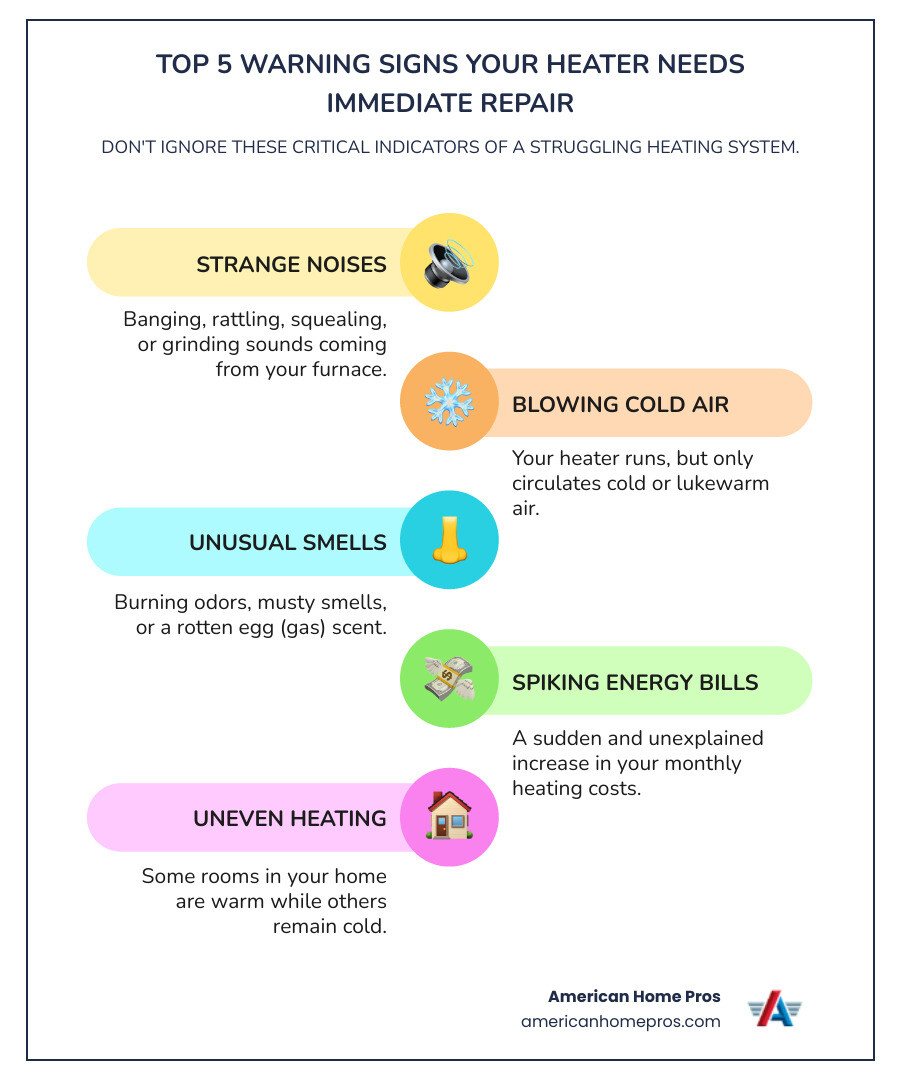
One of the first things homeowners notice when their heating system is on the fritz is inefficient heating. Your home might not be reaching the desired temperature, or perhaps some rooms are warm while others remain stubbornly cold. This uneven heating is a classic sign of trouble. Coupled with this, you might observe a significant increase in your energy bills. If your utility costs are skyrocketing without a change in usage, your heater is likely working overtime to compensate for an underlying issue, losing efficiency in the process.
Beyond just the temperature, your senses can provide crucial clues. Strange noises emanating from your furnace, such as banging, rattling, or squealing, are never a good sign. Neither are unusual smells, especially burning odors or, even worse, the smell of rotten eggs. These aren’t just annoyances; they can indicate serious problems that require immediate attention. For a deeper dive into these indicators, check out our guide: Unveiling the Secrets of Your Furnace: 6 Signs It May Need Help.
Common Performance Issues
Sometimes, your heater might seem to be working, but it’s not performing as it should. A furnace blowing cold air instead of warm is a clear red flag. This can be due to a variety of reasons, from a malfunctioning thermostat to a pilot light issue, or even restricted airflow.
Uneven temperatures throughout your home—where one room is toasty and another is chilly—suggests a problem with heat distribution, possibly due to ductwork issues or a failing blower motor. Another common complaint we hear is constant cycling, where your heater turns on and off frequently. This “short cycling” not only wastes energy but also puts unnecessary wear and tear on your system, shortening its lifespan.
Thermostat problems can also mimic heater malfunctions. If your thermostat isn’t accurately reading the temperature or isn’t communicating correctly with your heating unit, it can lead to uncomfortable conditions. If you’re experiencing your furnace blowing cold air, we have more insights here: Why Is My Furnace Blowing Cold Air?.
Strange Sights and Sounds
Your heating system shouldn’t sound like a haunted house. If you hear banging or rattling noises, it could indicate loose components, a problem with the blower motor, or even issues within your ductwork. Squealing or grinding sounds often point to worn-out belts or motor bearings that need lubrication or replacement. These noises are your heater’s way of crying for help, so don’t ignore them!
Visually, a healthy furnace should typically have a blue pilot light (for gas furnaces). If you notice a yellow pilot light, it could signal incomplete combustion, which can produce carbon monoxide—a dangerous gas. Visible rust or corrosion on your heating unit or its components is another sign of aging or moisture problems that need investigation. If your furnace isn’t lighting correctly, we have some troubleshooting tips: Furnace Not Lighting? Check These Things.
Critical Safety Warnings: When to Call for Heater Repair in Tulsa, OK Immediately
Some heater problems go beyond inconvenience and pose serious safety risks. If you ever detect a rotten egg or gas smell near your furnace, evacuate your home immediately and call your gas company and then us. This is a potential gas leak, and it’s extremely dangerous.
Burning odors, while sometimes normal for the first few uses of the season as dust burns off, can also indicate overheating electrical components or a clogged filter. Trust your nose—if it smells like something is genuinely burning inside your system, it’s time to call for professional help. For more on this, read: Why Does My Heater Smell Like Something Is Burning?.
Perhaps the most critical warning sign is an alert from your carbon monoxide detector. Carbon monoxide (CO) is an odorless, colorless gas produced by incomplete combustion, and it can be deadly. Symptoms of CO exposure include headaches, dizziness, nausea, and confusion. If your CO detector goes off, open windows, get fresh air, and contact emergency services immediately, followed by our team for a thorough inspection of your heating system. We understand the urgency of these situations and are equipped for rapid response for heater repair in Tulsa, OK to ensure your family’s safety.
Common Tulsa Heating Systems and Their Typical Problems
Tulsa homeowners rely on various heating systems to combat our diverse weather. Understanding the type of system you have and its common issues can help you pinpoint problems faster and communicate effectively with our technicians. For a general overview of heating services, you can visit our Heating page.
The most prevalent heating systems in the Tulsa metro area are gas furnaces, electric furnaces, and heat pumps. Each has its own operational characteristics and a unique set of common problems.
Gas Furnace Issues
Gas furnaces are a popular choice in Tulsa, OK, known for their powerful heating capabilities. However, they can experience specific issues. Pilot light or ignition failure is a frequent culprit when your gas furnace isn’t producing heat. If the pilot light won’t stay lit or the electronic ignition system isn’t sparking, your furnace simply won’t start. Faulty thermocouples, which are safety devices that detect the pilot light flame, can also prevent your furnace from operating.
Blower motor malfunctions can lead to poor airflow or no heat distribution, leaving parts of your home cold. And, as simple as it sounds, a clogged air filter is one of the most common reasons for gas furnace inefficiency and breakdowns. A dirty filter restricts airflow, forcing your furnace to work harder and potentially leading to overheating or premature component wear. We even have tips on How to Clean a Gas Furnace.
Electric Furnace Issues
Electric furnaces, while generally simpler than their gas counterparts, also have their share of problems. Burnt-out heating elements are a primary cause of insufficient heat. These elements are responsible for generating warmth, and if one or more fail, your furnace’s heating capacity will be reduced.
Sequencer problems can prevent heating elements from turning on in the correct order, leading to partial or no heat. Tripped circuit breakers are another common issue, often indicating an electrical overload within the furnace. Overheating can also occur if the furnace’s internal components become too hot, causing the system to shut down as a safety measure. If you’re experiencing issues with an electric furnace, our team is skilled in diagnosing and repairing these specific problems.
Heat Pump Complications
Heat pumps are incredibly versatile, providing both heating and cooling. However, their dual function means they can encounter unique issues. One common problem is getting stuck in heating or cooling mode, meaning your system can’t switch between the two as needed, which can be particularly frustrating during Tulsa’s unpredictable seasonal transitions.
Refrigerant leaks are another frequent complication, as heat pumps rely on refrigerant to transfer heat. A leak can drastically reduce efficiency and heating capacity. Defrost cycle failure can cause ice to build up on the outdoor unit in colder temperatures, hindering its ability to extract heat from the outside air. Lastly, auxiliary heat issues can leave you without sufficient warmth when the heat pump struggles in very cold weather. Understanding how auxiliary heat works is crucial for heat pump owners: What is Aux Heat on My Thermostat?. Our technicians are experts in handling these complex heat pump repairs.
The Dangers of DIY vs. The Safety of Professional Heater Repair in Tulsa, OK
When your heater falters, the temptation to fix it yourself might arise, especially if you’re handy around the house. However, when it comes to heating systems, especially in Tulsa, OK, attempting DIY repairs can be incredibly risky. We strongly advocate for professional intervention, not just for the quality of the repair but, more importantly, for your family’s safety. For all your heating repair needs, trust our expertise: Furnace Repair.
Heating systems involve complex electrical wiring, pressurized gas lines (for gas furnaces), and intricate mechanical components. A misstep can lead to severe consequences.
Why You Should Avoid DIY Heater Repairs
The risks associated with DIY heater repair in Tulsa, OK are significant and far outweigh any potential savings. Firstly, there’s a serious risk of electrocution. Furnaces and heat pumps operate on high voltage, and improper handling of electrical components can lead to dangerous shocks.
For gas furnaces, the potential for fire or carbon monoxide exposure is a critical concern. Natural gas is highly flammable, and even a small leak can lead to an explosion. Incomplete combustion or faulty venting, often a result of amateur repairs, can release deadly carbon monoxide into your home. As we mentioned earlier, CO is odorless and colorless, making it a silent killer.
Beyond immediate safety hazards, attempting DIY repairs can easily make the problem worse, turning a minor issue into a major, more expensive repair. Moreover, many manufacturers’ warranties become void if unauthorized personnel tamper with the unit. This means you could be on the hook for the full cost of future repairs, even if the initial problem was minor. Our advice: leave heating system repairs to qualified experts.
The Value of a Certified Technician
Choosing a certified technician for your heater repair in Tulsa, OK brings invaluable benefits. Our trained technicians possess specialized diagnostic tools that allow them to accurately identify the root cause of your heater’s problem, rather than just treating symptoms. This precision ensures a lasting repair.
We also have access to quality, manufacturer-approved parts, ensuring that any replacements integrate seamlessly with your existing system and maintain its efficiency. Professional technicians adhere to strict safety codes and regulations, guaranteeing that your repair is not only effective but also safe and compliant. Our team undergoes continuous training to stay updated on the latest HVAC technologies and best practices. Their expertise and experience mean they can handle any heating system, from gas furnaces to electric models and complex heat pumps, with confidence and skill. When it comes to finding reliable help, knowing How to Hire the Best HVAC Company is key.
Repair or Replace? Making the Right Decision for Your Home
One of the toughest decisions homeowners face is whether to repair a struggling heater or invest in a brand-new system. It’s a question of short-term cost versus long-term value. We’re here to help you steer this choice, ensuring you make the best decision for your home and budget. For a deeper discussion, explore our article: Should I Repair or Replace My Furnace?.
Several factors come into play when deciding between repair and replacement. The age of your system, the frequency of repairs, and its current energy efficiency are all crucial considerations.
When to Choose Repair
If your heating system is relatively young—generally under 15 years old—and experiences its first major breakdown, repair is often the more economical choice. A single component failure, especially if it’s a minor part, can be fixed without breaking the bank. For instance, if you’re dealing with a simple thermostat issue or a clogged filter, a repair can quickly get your system back in working order. Our team is always ready for Furnace Repair in Tulsa, OK to address these types of issues.
Signs It’s Time for a Replacement
On the other hand, if your heating system is approaching or has surpassed its typical lifespan of 15 to 20 years, it might be time to consider a replacement. Furnaces, for example, typically last between 15 to 20 years with proper maintenance. If your unit is constantly breaking down, requiring frequent and recurring repairs, the cumulative cost of these fixes can quickly exceed the cost of a new system. Many homeowners find that if they’re constantly calling for heater repair in Tulsa, OK, a replacement becomes the more cost-effective solution in the long run.
Rising energy bills are another strong indicator that your old heater is losing efficiency. An older system may struggle to heat your home adequately, consuming more energy in the process. If you have a heating and cooling system that is older than 12 years, it’s wise to start looking at replacement options. Furthermore, if key components are obsolete, finding replacement parts can be difficult or impossible, forcing a replacement. Investing in a new, energy-efficient model can lead to significant savings on your utility bills and provide greater comfort. When it’s time for a new system, we handle Furnace Installation/Replacement with expertise.
The Power of Prevention: Heater Maintenance Benefits
While we’re always here for your heater repair in Tulsa, OK needs, we firmly believe that an ounce of prevention is worth a pound of cure. Regular heater maintenance is not just a recommendation; it’s an investment in your home’s comfort, safety, and efficiency. Our Furnace Maintenance in Tulsa services are designed to keep your system running smoothly.
Here’s a list of the benefits you can expect from regular heater maintenance:
- Improved energy efficiency
- Extended equipment lifespan
- Improved safety for your home and family
- Better indoor air quality
- Fewer unexpected breakdowns
- Consistent and reliable home comfort
- Compliance with warranty requirements
- Peace of mind
Maximizing Efficiency and Lifespan
One of the most immediate benefits of regular heater maintenance is improved energy efficiency. A well-maintained system doesn’t have to work as hard to heat your home, which translates directly to lower utility bills. Think of it like a car—regular oil changes and tune-ups keep it running smoothly and efficiently. The same applies to your heater.
By catching minor issues before they escalate, maintenance helps prevent unexpected and often costly repairs. This means fewer inconvenient breakdowns during the coldest parts of the year. Regular check-ups also significantly extend the lifespan of your heating unit. A system that receives consistent care can easily reach or even exceed its projected 15-20 year lifespan. Maintenance leads to consistent home comfort and provides invaluable peace of mind, knowing your heater is reliable. As we always say, HVAC Maintenance Prevents Repair Calls.
What to Expect During a Maintenance Visit
When our technicians perform a maintenance visit, they conduct a thorough inspection of your entire heating system. This includes checking all electrical connections, gas lines, and safety controls. We clean essential components, such as the blower motor, burners, and heat exchanger, removing dust and debris that can hinder performance and pose fire hazards.
Moving parts are lubricated to reduce friction and wear, ensuring smooth operation. Crucial safety checks are performed to detect any potential carbon monoxide leaks or fire risks. We also inspect and, if necessary, replace your furnace filter. You should change your furnace filter every 1 to 3 months, depending on factors like filter type and indoor air quality. This simple step is vital for maintaining good airflow and indoor air quality. A maintenance visit is a comprehensive tune-up designed to prepare your system for the demands of the season. Don’t forget that Its Time for Your Fall HVAC Maintenance is crucial for winter readiness.
Conclusion
When the temperatures drop in Tulsa, a functioning heater isn’t just a luxury—it’s a necessity. We’ve explored the telltale signs that your heating system needs attention, from strange noises and smells to performance issues and critical safety warnings. We’ve also highlighted the specific problems common to gas furnaces, electric furnaces, and heat pumps, providing you with the knowledge to recognize when something is amiss.
The dangers of attempting DIY heater repair in Tulsa, OK are substantial, risking not only damage to your system but also your family’s safety. Professional technicians bring expertise, specialized tools, and adherence to safety standards that simply can’t be replicated at home. Making the decision to repair or replace hinges on factors like your system’s age, repair frequency, and energy efficiency. While repair might be suitable for newer systems with minor issues, older, frequently malfunctioning units are often better replaced for long-term savings and comfort.
Finally, the power of prevention through regular heater maintenance cannot be overstated. It’s the key to maximizing efficiency, extending lifespan, improving safety, and ensuring consistent comfort throughout the chilly Tulsa winters.
At American Home Pros, a veteran-owned HVAC and plumbing company, we pride ourselves on skilled technicians, transparent communication, and a commitment to customer satisfaction, treating every customer like family. Don’t wait for a complete breakdown to compromise your comfort and safety. If you notice any of the warning signs discussed, it’s time to act.
For expert furnace repair in Tulsa, OK, contact our team today!
